


As of October 18, 2026, more people are searching “composite chart” than ever, and the reason is simple. A composite chart is a single chart built from the midpoints between two people’s planets and points, used to describe the relationship itself as its own entity, separate from either partner’s personal chart.
What Is a Composite Chart?
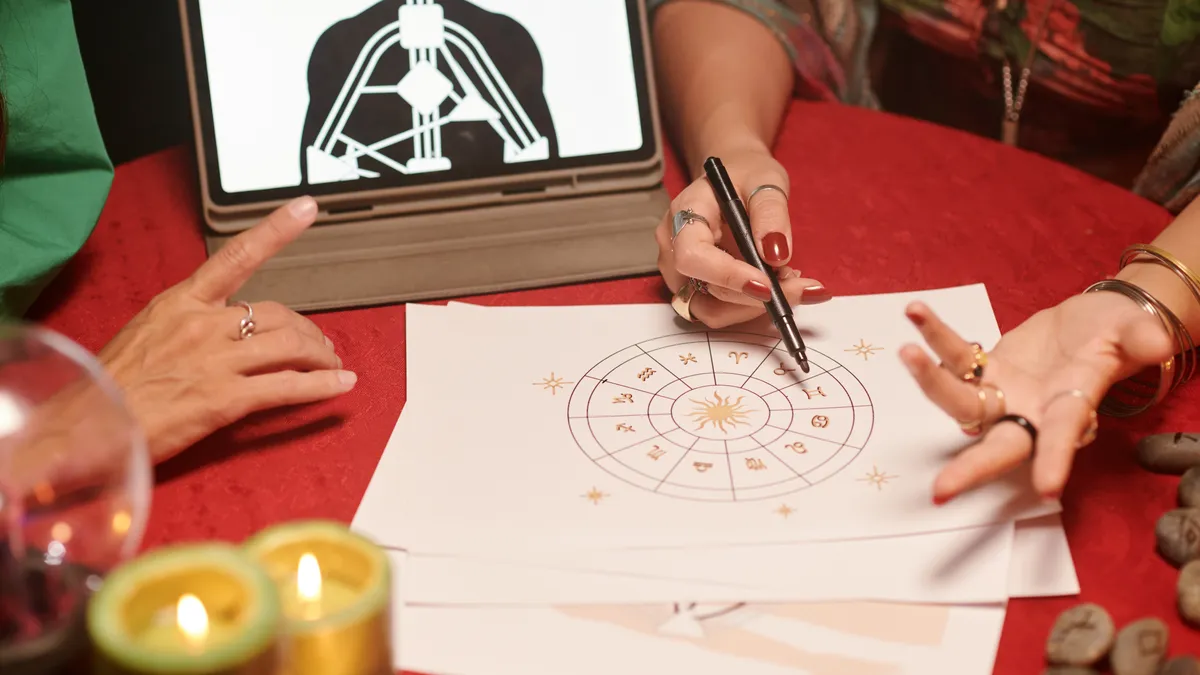
This chart takes two birth charts and finds the midpoint of each planet pair. The Sun midpoint, Moon midpoint, Venus midpoint, and so on become placements in a brand new wheel that represents the bond itself.
Think of it less as “your chart plus mine” and more as a third entity born the moment two people meet. This is why a reading like this often feels eerily specific about the relationship’s purpose, its friction points, and what it is here to teach both people.
How Do Astrologers Calculate It?
The math behind this method is midpoint geometry, not simple averaging of dates or houses. Astrologers calculate the midpoint between each person’s Sun, Moon, Venus, Mars, and other planets, then place those midpoints into a single wheel.
Houses get trickier. Some astrologers use the midpoint of the two Ascendants, others use the location where the relationship began. You can check raw planetary positions yourself through NASA JPL’s ephemeris tool, though translating that data into a full reading takes more than a position lookup.
This kind of work is a layer on top of synastry, which compares two individual charts planet to planet. Synastry shows how two people affect each other. The midpoint chart shows what the two of them create together, almost like a child born from the union, with its own temperament and needs.

Why Does the Shared Sun Placement Matter?
The shared Sun describes the core identity and purpose of a relationship, the thing it is fundamentally about. This placement in the 7th house, for instance, often points to a partnership built around commitment and mutual recognition as its central theme.
A shared Sun in the 8th house suggests the relationship exists to transform both people through shared resources, intimacy, or crisis. Neither placement predicts an outcome. Both describe a flavor, a lesson, a center of gravity the bond tends to orbit around.
I think of this shared Sun as the relationship’s reason for existing. Some bonds are built to teach stability, others to teach surrender. The sign and house placement is usually the fastest way to name that reason.
What Does This Reveal About Timing?
A reading like this does not predict when someone will text back or whether a relationship lasts a certain number of years. What it does show is which themes intensify when outer planets make contact with shared placements over time.
If transiting Saturn crosses the shared Sun point, the relationship often enters a phase of testing, commitment, or restructuring. This mirrors how Saturn works in personal charts, when Saturn squares your natal Saturn, which happens around ages 21 to 22 and again around 36 to 37, bringing pressure that asks you to mature or let go.
Saturn transits here work the same way but for the “third entity” of the relationship itself. The pressure is not random. It is asking the partnership to grow up in a specific area tied to whichever house Saturn is moving through.
Should You Compare It to Synastry?
Comparing the two gives a fuller picture than either chart alone. Synastry tells you how you personally feel pulled toward or repelled by someone. The midpoint reading tells you what the relationship becomes once it exists.
| Chart Type | What It Describes | Best Used For |
|---|---|---|
| Synastry | How two individual charts interact, planet to planet | Understanding personal chemistry and friction |
| Composite chart | A new chart built from midpoints, describing the relationship as its own entity | Understanding the bond's purpose, strengths, and lessons |
| Combined use | Synastry plus composite together | Seeing both the personal pull and the shared destiny |
Some astrologers lean heavily on synastry because it feels more personal, more about “us” in daily life. Others find this midpoint method more honest about long-term compatibility, since it strips away individual ego and shows the relationship’s own nature. Reading both side by side, which you can start with a free synastry chart, tends to give the clearest answer.
Some couples find one layer speaks louder than the other at different stages. Early on, synastry often explains the pull, the chemistry that feels instant and hard to name. Years in, the midpoint chart can explain why the relationship keeps circling the same lesson no matter how much changes around it. Reading only one layer can leave half the story untold.
When Do Shared Planets Activate in Real Life?
Transiting planets moving through the sky will eventually cross every midpoint placement a relationship has. Below are confirmed 2027 sign changes for Venus and Mars, two planets that frequently activate shared Venus, Mars, and 7th house points in relationship charts.
| Date | Planet | New Sign |
|---|---|---|
| January 8, 2027 | Venus | Sagittarius |
| February 22, 2027 | Mars | Leo |
| April 21, 2027 | Venus | Aries |
| May 15, 2027 | Mars | Virgo |
| July 16, 2027 | Mars | Libra |
| September 3, 2027 | Mars | Scorpio |
| October 16, 2027 | Mars | Sagittarius |
These seven shifts are not personal to your chart until you check where they land against your own midpoint degrees. A Venus sign change touching the ruler of your 7th house midpoint, for example, could coincide with a noticeable shift in affection or commitment conversations. The dates themselves come from standard ephemeris data, the kind found on astro.com, so you can cross-check any date against your own degrees.
What If the Chart Looks Difficult?
A hard version of this chart, one with tense Saturn, Pluto, or Mars aspects to the Sun or Moon, is not a verdict on whether a relationship is doomed. Difficult placements often point to relationships that require more conscious work, clearer boundaries, or slower timelines.
Some of the most enduring partnerships carry charts full of hard aspects, because friction can also be the thing that forges depth. What matters more than the aspect itself is how both people choose to respond to the pressure it describes.
If you are staring at this kind of reading wondering whether to keep going, you are not alone in that question. Many readers writing in through the letters section ask some version of the same thing, whether the hard parts of a chart mean they should walk away or lean in. If the question on your mind is more about contact than compatibility, pieces like should I text my ex tackle timing from a different angle.
How Does This Fit Into the Bigger Picture?
A composite chart is one tool among several, not a final verdict on love. It works best alongside synastry, transit timing, and your own lived sense of the relationship day to day.
No chart, this one included, can tell you with certainty what someone will do or feel next. What a reading like this can offer is language, a way to name the pattern you are already living inside, so the pattern stops feeling so formless.
Someone studying a difficult 8th house Sun placement might notice the relationship keeps returning to questions of trust and shared resources. Naming that pattern does not resolve it overnight. It does give both people a shared vocabulary for what they are actually working through, instead of circling the same argument without knowing its root.
If you want a fuller read on how two specific charts interact, including this layer, you can learn more about how I approach relationship charts or start exploring from the home page. For many people, seeing the written-out pattern is what finally makes an unclear relationship feel understandable.