

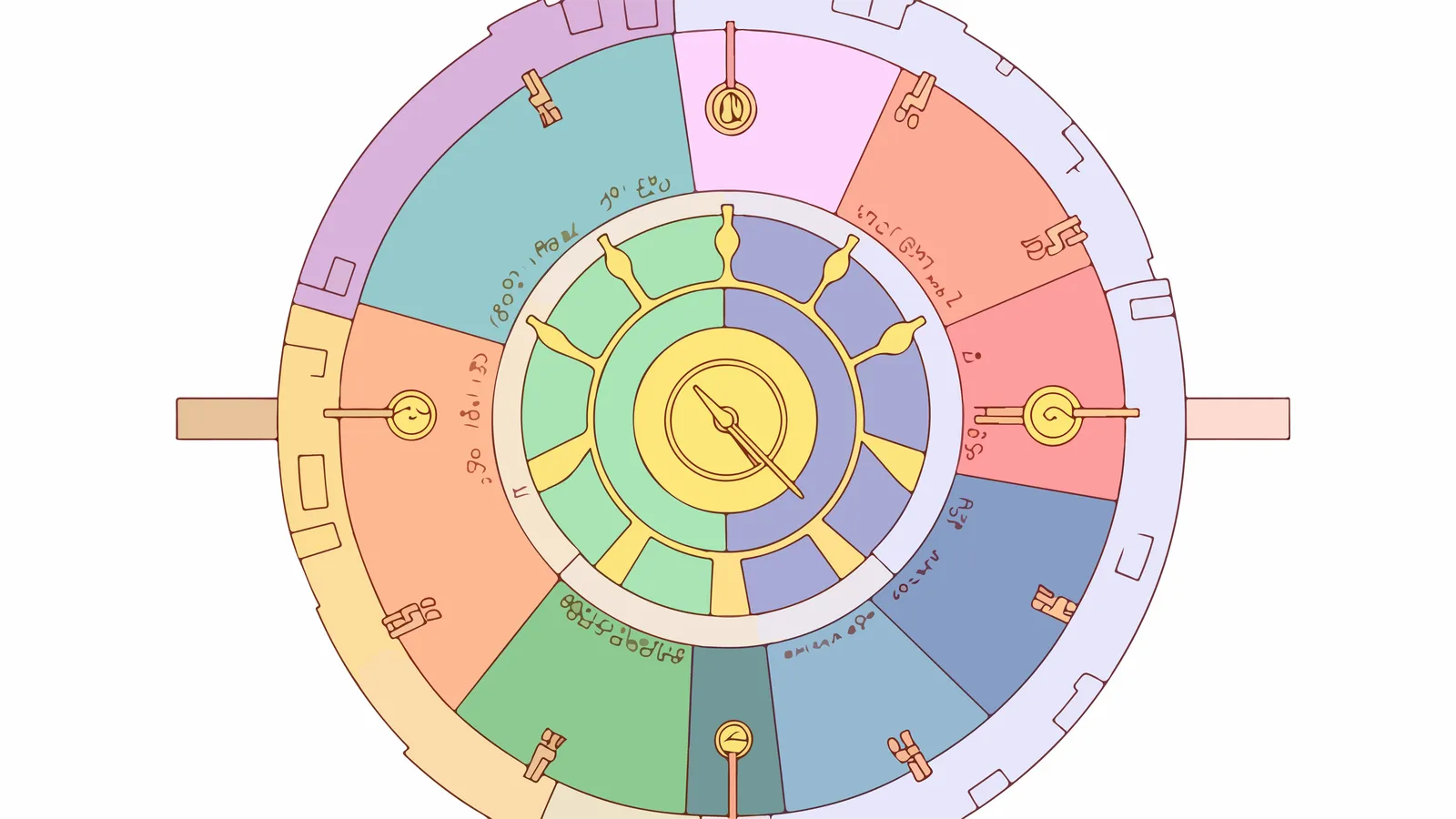
A synastry chart calculator compares two birth charts to show how your planets interact with theirs. It plots your Venus, Mars, Moon, and Sun against their chart to reveal patterns of attraction, friction, and ease between you and the one person you cannot stop thinking about.
What Is a Synastry Chart Calculator and How Does It Work?
A synastry chart calculator takes two sets of birth data and overlays them into one wheel. It plots where each person’s planets fall relative to the other’s houses, the twelve life zones a chart is divided into. The output is usually a grid of aspects, the angular relationships between planets that describe friction or ease.
Most calculators need an exact birth time for accuracy, since houses shift roughly every two hours. Without a time, you can still compare Sun, Venus, and Mars signs, but the deeper house overlays stay fuzzy. This is why a rough guess often produces a reading that feels half true.
For a consistent reference chart, I use the ephemeris tables at astro.com, which track planetary positions daily including the Venus and Mars sign changes through 2027. These positions do not change based on which calculator you use, only the interpretation does.
How Do You Read a Synastry Chart Once You Have It?
Reading a synastry chart starts with the big three: Sun, Moon, and Venus. These show identity, emotional needs, and what each person finds lovable.
Next, look at Mars, which shows drive and friction, and Saturn, which shows commitment and structure. If your Venus sits close to their Mars, there is often a magnetic pull that feels immediate.
Aspects matter more than exact house placement for most people learning this for the first time. A conjunction, where two planets sit in the same degree, intensifies whatever those planets represent. A square, a 90 degree angle, often means growth through tension rather than ease.
Read the whole picture before deciding anything means something. One hard aspect in an otherwise warm chart rarely defines the relationship. If you are trying to decide whether to reach out after reading your results, the breakdown in Should I Reach Out to My Ex? walks through that decision separately from the chart itself.

Which Planets Matter Most in a Synastry Comparison?
Venus and Mars carry the most weight for romantic attraction, since they govern desire and affection. The Moon matters most for long term comfort, because it shows emotional habits formed early in life.
Saturn overlays are often overlooked but worth watching closely. When someone’s Saturn lands on your Sun or Moon, the relationship can feel weighty and serious fast, sometimes in a grounding way and sometimes in a restrictive one.
| Aspect | Planets Involved | Common Theme |
|---|---|---|
| Conjunction | Venus to Mars | Strong physical and romantic pull |
| Trine | Moon to Moon | Emotional ease and shared instincts |
| Square | Sun to Saturn | Growth through pressure or delay |
| Opposition | Venus to Saturn | Attraction mixed with caution or distance |
| Sextile | Mercury to Venus | Easy conversation and mutual understanding |
No single row in this table decides a relationship’s fate. Aspects describe tendencies, not outcomes, and they always sit inside the larger context of both full charts.
What Do Synastry Houses and Overlays Reveal About a Relationship?
House overlays show where someone’s planets fall inside your chart’s twelve life areas. If their Sun lands in your seventh house, the house of partnership, the relationship may feel significant from early on.
A partner’s planets in your fourth house, the house of home and family, often brings a domestic, settling quality. Planets landing in your sixth house, which governs daily routines and health, can show up as a relationship built through shared tasks and small daily rhythms rather than grand gestures.
Your eighth house, tied to shared resources and emotional merging, often lights up in relationships that move fast toward intimacy. Your tenth house, the career and public role house, can show whether a partner influences how others see your ambitions.
When Should You Run a Synastry Chart for the Best Insight?
A synastry chart does not expire, since the natal placements are fixed at birth. What changes is the current transits layered on top, which is why timing still matters when you interpret results.
Mars enters Virgo on November 25, 2026, shifting collective energy toward precision and practical effort in relationships. Venus enters Scorpio on December 4, 2026, deepening emotional intensity and a pull toward privacy in how people show affection. These shifts do not rewrite your synastry chart, but they color how its themes play out in real time.
If you are 29 and feeling unusually serious about commitment, that often lines up with a Saturn return, which happens for most people between ages 27 and 30. A synastry chart read during this window can feel heavier than one read a few years earlier, simply because you are weighing partnership against your own growing sense of structure.
Jupiter returns roughly every 11.9 years and tends to expand whatever house it transits. If Jupiter is moving through your seventh house of partnership around the time you run a synastry comparison, the themes in the chart may feel more pronounced, more hopeful, or simply louder than usual.
Should You Trust a Synastry Chart Calculator Completely?
A synastry chart calculator is accurate at the level of math, since planetary positions are fixed facts you can verify against sources like astro.com. What it cannot do is predict behavior, guarantee compatibility, or replace the work of actually knowing someone.
No chart, however detailed, diagnoses a relationship as healthy or unhealthy. It offers a language for patterns you may already sense but could not name. Treat the output as a conversation starter with yourself, not a final ruling.
If your results show heavy Saturn or Pluto overlays, that is not a warning to run. It often means the relationship asks for patience and honesty rather than ease. Compare that pattern against how the relationship actually feels day to day before drawing conclusions.
People often run a synastry chart hoping it will answer “is he the one,” but the chart only shows raw material, not destiny. For a closer look at that specific question, Is He The One? walks through what synastry and Venus placements can and cannot confirm.
How Does Synastry Compare to Other Compatibility Tools?
Synastry is one of several methods astrologers use to compare two people. A composite chart, by contrast, creates a single blended chart representing the relationship itself rather than two separate people overlaid.
Birthdate compatibility calculators, which often use simplified Sun sign matching, are faster but far less detailed than full synastry. The piece on Compatibility Calculator by Birthdate explains how that simpler method works and where its limits sit.
Synastry sits in the middle of these tools, detailed enough to show nuance but still dependent on accurate birth data. None of these methods replace the slower work of watching how two people actually treat each other over time.
What Should You Do After Running a Synastry Chart?
Once you have your overlay and aspect list, sit with it before reacting. Notice which placements explain feelings you already had, and which surprise you.
If the chart reveals ongoing tension around communication, that is often Mercury related, and worth naming directly with your partner rather than carrying silently. If it reveals ease around the Moon, that comfort is real, but it still needs tending through daily choices, not just planetary luck.
For ongoing letters that track these shifts as they happen, the letters archive collects timing pieces as new transits unfold. You can read more about how I approach these interpretations on my page, including how chart positions, not guesswork, shape every reading.
If you want a fuller reading built specifically around your two charts rather than a general overlay, a Compatibility Reading goes deeper into the aspects and houses most relevant to your situation.